
How Mitochondria Respond to Specific Wavelengths of Light

Mitochondria are a key focus in research on how light interacts with biological tissue. Researchers have studied certain wavelengths of red and near-infrared light for their potential to influence mitochondrial activity, particularly through interactions with cellular components such as cytochrome c oxidase. The red light therapy devices use specific wavelength ranges to deliver light to the body. However, the biological response can depend on factors such as intensity, exposure time, and tissue characteristics. These interactions are part of a broader field known as photobiomodulation, which continues to attract scientific interest. Understanding how mitochondria respond to different wavelengths helps explain the biological mechanisms researchers are investigating in light-based therapies.
How Red Light Interacts With Mitochondrial Components

Red light, generally associated with wavelengths between approximately 620 and 700 nanometres, has been investigated for its potential effects on mitochondrial function. One proposed mechanism involves cytochrome c oxidase, a protein complex within the mitochondrial electron transport chain. This complex plays an important role in transferring electrons during cellular respiration, contributing to ATP production. Researchers have proposed that certain red wavelengths may influence this protein complex’s activity and affect how efficiently mitochondria function. However, the precise mechanisms remain under investigation. The extent of any response depends on experimental conditions and may not occur identically in every tissue or cell type.
The Role of Near Infrared Wavelengths
Near infrared light occupies a wavelength range immediately beyond visible red light, commonly extending from approximately 700 to 1,400 nanometres in photobiomodulation research. Researchers study these wavelengths partly because their interactions with biological tissue can differ from those of visible light. Depending on wavelength and tissue composition, near-infrared light may penetrate deeper into certain biological structures. This creates opportunities to investigate mitochondrial responses in tissues located beneath the skin. Like red light, near-infrared exposure has been associated with proposed changes in cellular energy production and signaling. However, deeper penetration does not automatically mean a stronger biological response, because absorption, scattering, and tissue characteristics influence how much energy reaches mitochondria.
Changes in Cellular Energy Production and Signaling
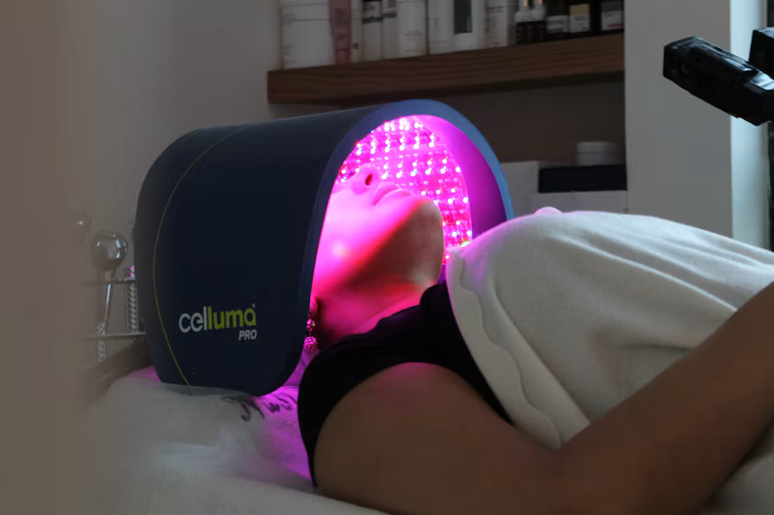
One important area of research concerns how light exposure may influence ATP production and other mitochondrial processes. Cytochrome c oxidase participates in the final stages of the electron transport chain, helping maintain the conditions necessary for ATP synthesis. Some studies suggest that photobiomodulation can influence this activity, potentially changing cellular energy availability. Changes in nitric oxide signaling and the generation of reactive oxygen species have also been connected to light exposure. Although these substances are often discussed in connection with cellular stress, they also participate in normal biological communication. At controlled levels, changes in these signaling molecules may influence processes involving inflammation, tissue responses, and cellular adaptation.
Mitochondria may respond to specific red and near-infrared wavelengths through changes involving electron transport, cellular energy production, and signaling pathways. Cytochrome c oxidase is one of the central components investigated in this research, although the precise mechanisms remain under study. Understanding wavelength-dependent responses helps explain the biological principles behind photobiomodulation and the importance of carefully evaluating …